

Black coffee is notorious for tasting bitter and burnt. Here’s some good news. It doesn’t have to be. Black coffee can taste smooth, non-bitter, with all kinds of different prominent and subtle flavors. Many people have never had smooth and flavorful black coffee. Well, all they need are these 5 tips to make smooth black coffee.

#1 – Better Beans
If you’re like me, I love coffee that’s smooth as silk, meaning zero bitterness. I also like both prominent and secondary flavors. I’m not just talking about “coffee” flavor, but coffee with flavor notes as listed above.
There are two sources of great coffee beans. The first is Kona coffee. 100% Kona coffee is awesome. I have never had a cup of Kona that didn’t put me into a coffee coma that I didn’t ever want to come out of. Unfortunately, 100% authentic Kona coffee costs $50-$75 per 12 ounce bag.
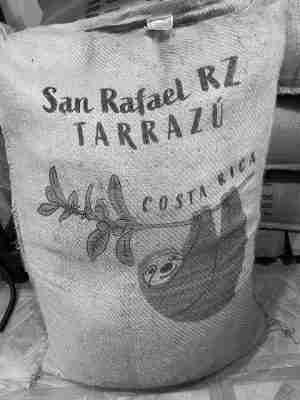
Here’s the good news. In my opinion, some of the best coffee on the planet comes from Central America. The best coffee in Central America comes from Costa Rica. And the best Costa Rican coffee comes from their Tarrazu Region. Each year Alisha, my wife and business partner, bring in 20-25 different coffee samples from the Tarrazu Region of Costa Rica. From those samples we taste test each one, just so we can select the very best bean, which will rival any Kona coffee bean. And here’s the kicker, we charge only $19 per 12-ounce bag.
A last thought about better beans, never buy a blend. Blends of different beans are 100% marking BS. There is no blend on the planet that can compare with a good single-source bean.
#2 – Better Roasted Beans
- The darker the roast the less caffeine, flavor, aroma, bioflavonoids, and antioxidants.
- Dark roast should never be darker than a very dark “brown”. Black beans taste more like the roaster and less like coffee. Almost all coffee snobs drink their coffee medium roasted.
- French Roast, Italian Roast, Continental Roast, Espresso Roast, etc. are all nothing more than marketing-speak for “Bitter & Burnt”.
- Although I loathe blended beans, I love blended roasts. So, if you take the same bean, from the same field, but blend different roasts, the result is often fantastic. I learned this trick from my customers. Many espresso drinkers will blend 50% medium roast with 50% dark roast. We have numerous customers that blend 80% dark roast with 20% white roast. Give it a try. Experiment, and you might just love it.
- Espresso is a brewing method, it is not a bean, it is not a blend, and it is certainly not a roast. Anyone saying otherwise is talking 100% marketing BS.


#3 – Fresher The Bean – Better The Coffee
- Generally speaking, I seldom drink coffee that was roasted over 30 days ago.
- To preserve your coffee, you can freeze whole bean coffee when it’s only a few days old. When you pull it out of the freezer, a few months later, it’ll taste about 90-95% as good as when it was only a few hours old. For a full analysis on preserving coffee, read this article.
- If it takes you 30 days to drink your order of coffee, then make sure that you’re buying coffee that’s only hours old. That’s why we, here at Lake City Coffee Roasters, roast and ship the same day.
- Never buy coffee that doesn’t have a “Roast Date” on the bag. I often check coffee in coffee shops, grocery stores, and the internet, to see if the bags have a roast date. 90% of the time they don’t have a roast date. If they do, the coffee was often roasted 3 weeks or more ago.
#4 – Find The Right Grind
Generally speaking, the finer the grind the more flavor, but also the more bitter the coffee. Conversely, the courser the grind, the less flavor, but also the smoother (non-bitter the coffee.
When it comes to grinding coffee, there’s always a balance between flavor and smoothness. The trick is to find what works best for you. I can’t tell you which grind is “best” for you. You’ll have to experiment to figure that out on your own. As a general guideline, you can start here:
- Any brewing system with a filter, start with a medium grind
- Any brewing system that’s under pressure, start with a fine grind
- Any brewing system that’s steeping, start with a course grind
So, how much coffee beans should you be grinding? Again, like grinding, how much beans depends on your personal taste. I’ve noticed that just 6 more means, more or less, an make a big difference in taste. For me personally, I use 20 grams of roasted coffee beans for 12 ounces of water.


#5 – Best Brewing Options?
- Nearly Zero Time Coffee
- Drip with timer
- MocaMaster with timer
- Cold Brew
- Smoothest non-bitter
- Cold Brew
- AeroPress
- Slow Pour Over
- MocaMaster
- Most Flavorful
- French Press
- Espresso
Lake City Coffee Roasters
Alisha and I (Russell) are wine snobs. That just means we started developing our pallets on wine. We took countless taste testing courses. We drank coffee from all over the world.
When we started drinking coffee, we were sadly disappointed. We searched and searched for a coffee roaster that took the taste of their coffee as seriously as we did wine. Sadly, there just wasn’t any. So, we did the next best thing, we started Lake City Coffee Roasters. Our goal was coffee that was super smooth with both prominent and subtle flavors that were as well balanced as a $100 bottle of French Bordeaux.
To do that, we just kept taste testing coffee bean after coffee bean until we consistently found what we loved coffee beans from the Tarrazu Region of Costa Rica. Today, we source 100% of our beans from this region. Then we roast and ship the same day. That’s why we may be a small family run business, but we produce some of the best coffee that you’re likely to find anywhere.


